

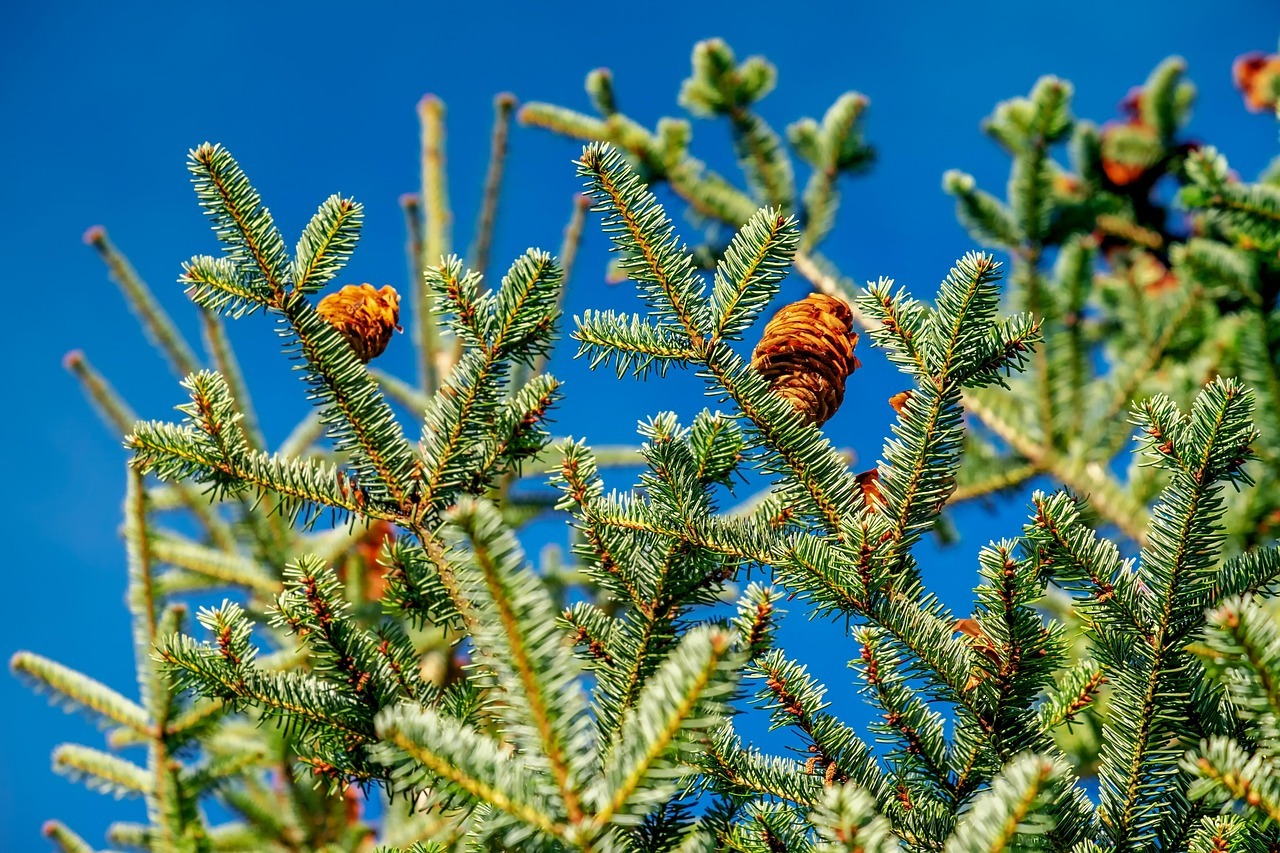
The Douglas Fir (Pseudotsuga menziesii) is one of British Columbia’s most well-known and valuable trees. Its towering presence can be seen across the province, from the coastal rainforests to the drier interior landscapes. Though often mistaken for a true fir, it actually belongs to its own unique genus, Pseudotsuga, meaning “false hemlock.”
This mighty evergreen is not just important for its impressive size—it’s a tree with deep ecological, economic, and cultural significance. The Douglas Fir has been used for centuries by Indigenous communities, is a key part of BC’s forestry industry, and provides a home for countless wildlife species.
Growth and Appearance
One of the easiest ways to identify a Douglas Fir is by its cones, which have tiny bracts sticking out between the scales, resembling mouse tails. The bark of younger trees is smooth and gray, but as the tree matures, it develops thick, furrowed bark that protects it from fire and pests. Its soft needles are spirally arranged along the branches, giving the tree a full, lush look all year round.
Douglas Firs are incredibly fast-growing, often reaching heights of 85 meters (280 feet) in BC’s coastal regions. Some of the largest specimens in the world are found in British Columbia, with trees that are over 1,000 years old still standing strong.
Why Douglas Fir Matters
The Douglas Fir is an ecological powerhouse. It provides food and shelter for a variety of animals, from birds like the Northern Spotted Owl to small mammals like squirrels and deer. Its thick canopy offers protection from wind and rain, and its deep root system helps prevent soil erosion.
Not only does the tree support BC’s ecosystems, but it is also one of the most commercially valuable species in North America. Its wood is strong, durable, and widely used in construction, furniture-making, and flooring. In fact, Douglas Fir timber is exported around the world, making it one of BC’s most important natural resources.
Fun Facts About Douglas Fir
- It is one of the tallest trees in Canada, with some specimens exceeding 100 meters.
- The Douglas Fir is not actually a true fir—it belongs to a different genus altogether!
- Many Indigenous legends describe how the tree’s cone bracts resemble the tails of mice hiding from a fire.
- The tree’s needles, when crushed, have a pleasant citrus-like aroma.
Conclusion
The Douglas Fir is a true giant of British Columbia’s forests. Whether you’re hiking through an ancient grove or building with its strong, reliable timber, this tree plays an essential role in the province’s natural and economic landscape. Its ability to withstand harsh conditions, support wildlife, and provide valuable resources ensures that it will remain a vital part of BC’s forests for generations to come.