

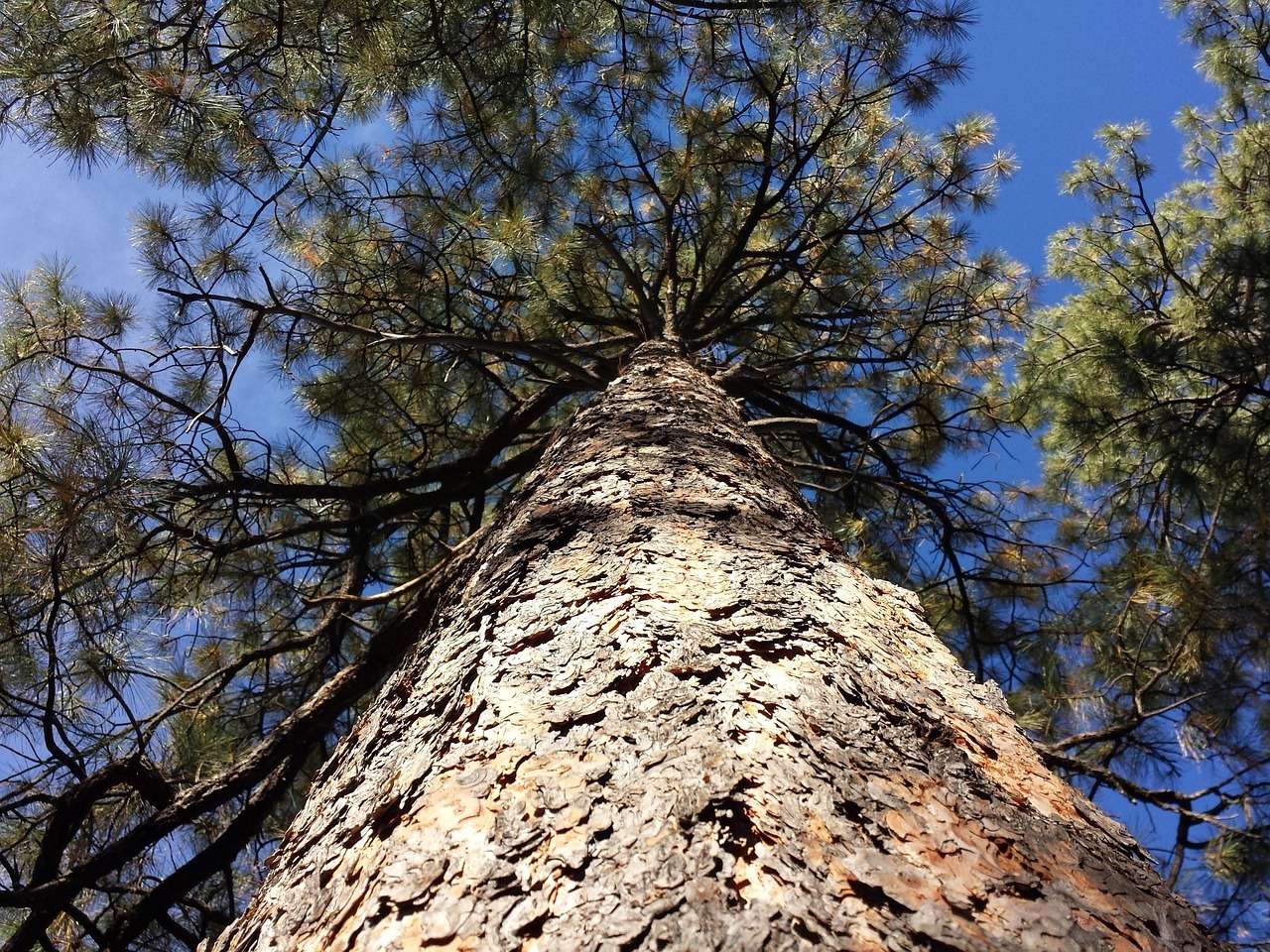
With its thick, orange bark, towering height, and long, graceful needles, the Ponderosa Pine (Pinus ponderosa) is one of the most recognizable trees in British Columbia’s dry forests. Unlike Lodgepole Pine, which grows in dense stands, Ponderosa Pine prefers open, sunny spaces, often found on rocky slopes and dry plateaus.
This tree has been a vital part of BC’s ecosystems and industries for centuries, providing timber, habitat, and even natural fire protection.
How to Identify Ponderosa Pine
- Needles: Long (up to 30 cm / 12 inches), flexible, and grow in bundles of three.
- Bark: Thick, deeply grooved, and orange-brown, with a puzzle-piece texture.
- Size: Can grow over 60 meters (200 feet) tall, making it one of BC’s largest pine species.
A Tree Built for Fire Survival
Ponderosa Pine is uniquely adapted to fire-prone environments:
- Its thick bark protects it from low-intensity fires.
- Its deep roots allow it to access underground water during droughts.
- Its seedlings grow best after fires, which clear the forest floor.
Uses of Ponderosa Pine
Ponderosa Pine is widely used in BC’s timber industry, particularly for:
- Home construction and furniture, thanks to its straight, durable wood.
- Doors, trim, and cabinetry, due to its fine grain and rich color.
- Utility poles and railroad ties, thanks to its long, straight growth.
Wildlife and Ponderosa Pine Forests
Ponderosa Pine forests provide:
- Nesting sites for birds, including woodpeckers and chickadees.
- Shade for large mammals, including elk and deer.
- A food source for small mammals, which feed on its seeds.
Fun Facts About Ponderosa Pine
- Its bark smells like vanilla or butterscotch on warm days.
- Ponderosa Pines can live for 500+ years.
- Some of the oldest trees pre-date European settlement in North America.
- Indigenous peoples used its bark, resin, and needles for medicinal and ceremonial purposes.
- Ponderosa Pine forests are some of the most fire-resistant in BC.
Conclusion
The Ponderosa Pine is a giant of British Columbia’s dry forests, standing strong in harsh conditions where few other trees can thrive. Whether admired for its beauty, resilience, or economic value, this tree remains a pillar of BC’s natural and cultural heritage.